
New lawns on sand
Home Lawn Hydroseeding in Sarasota, FL
A new bahiagrass lawn for a new house, a bare yard or a lawn that is past saving, sprayed onto ground we have prepared first.
- We measure the ground before we put a number on paper
- Seed mix and fertilizer timed to Sarasota County's summer rules
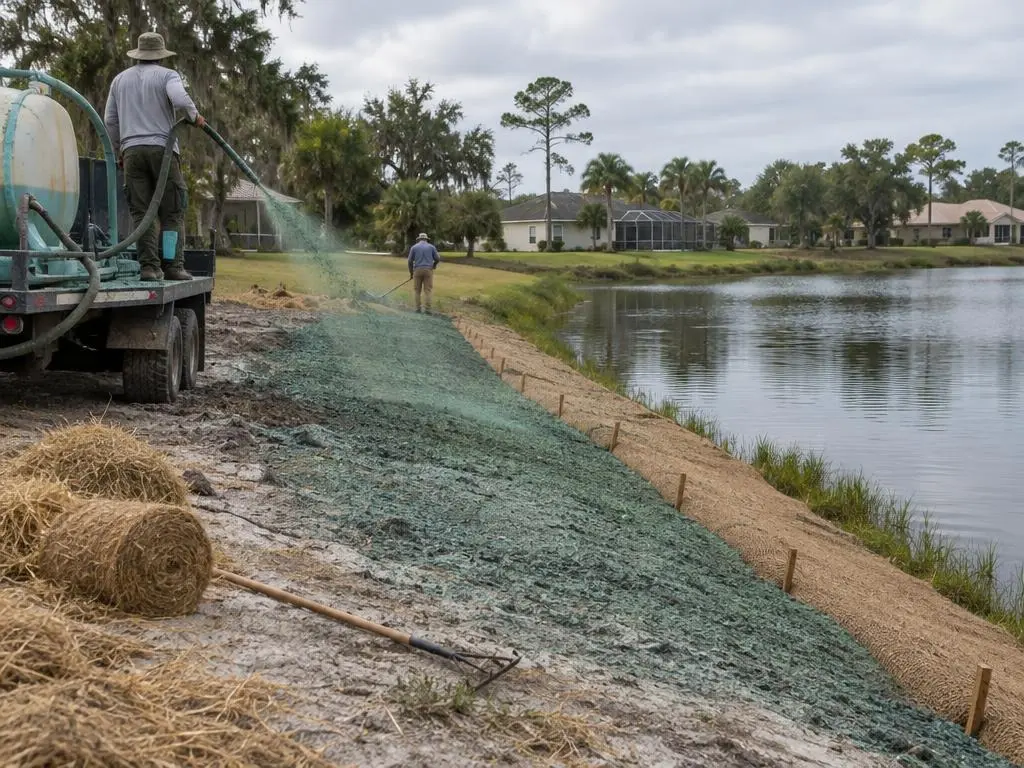
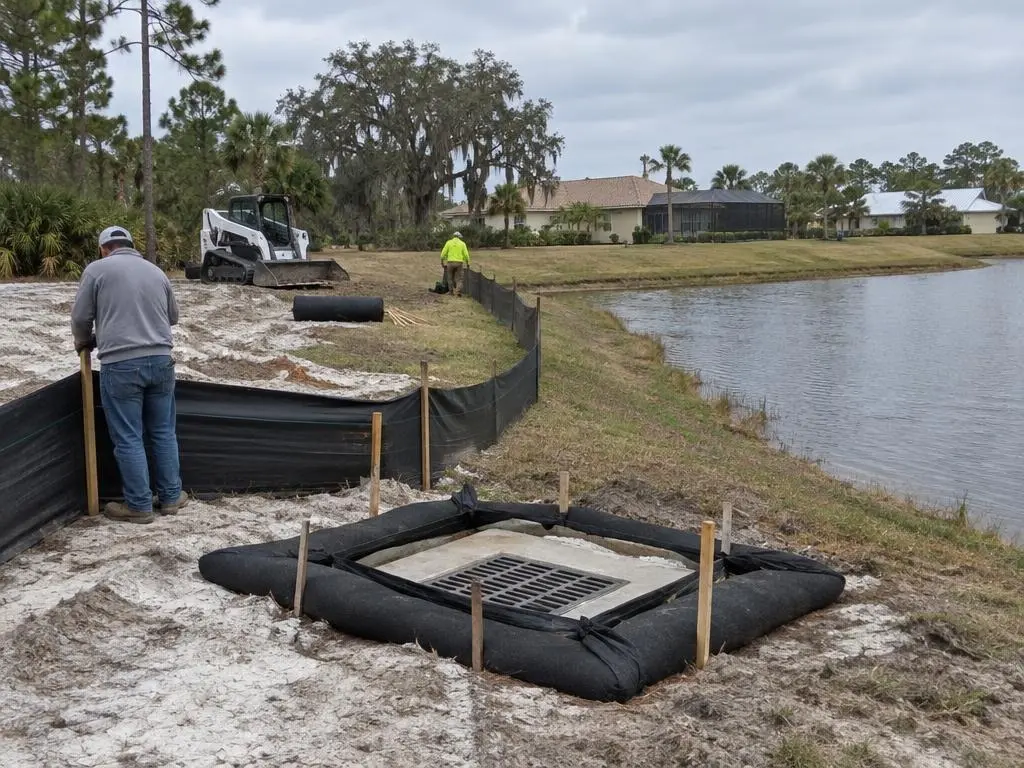
- Sediment barriers set before clearing near ponds, canals and swales
A New Lawn From Bare Sand
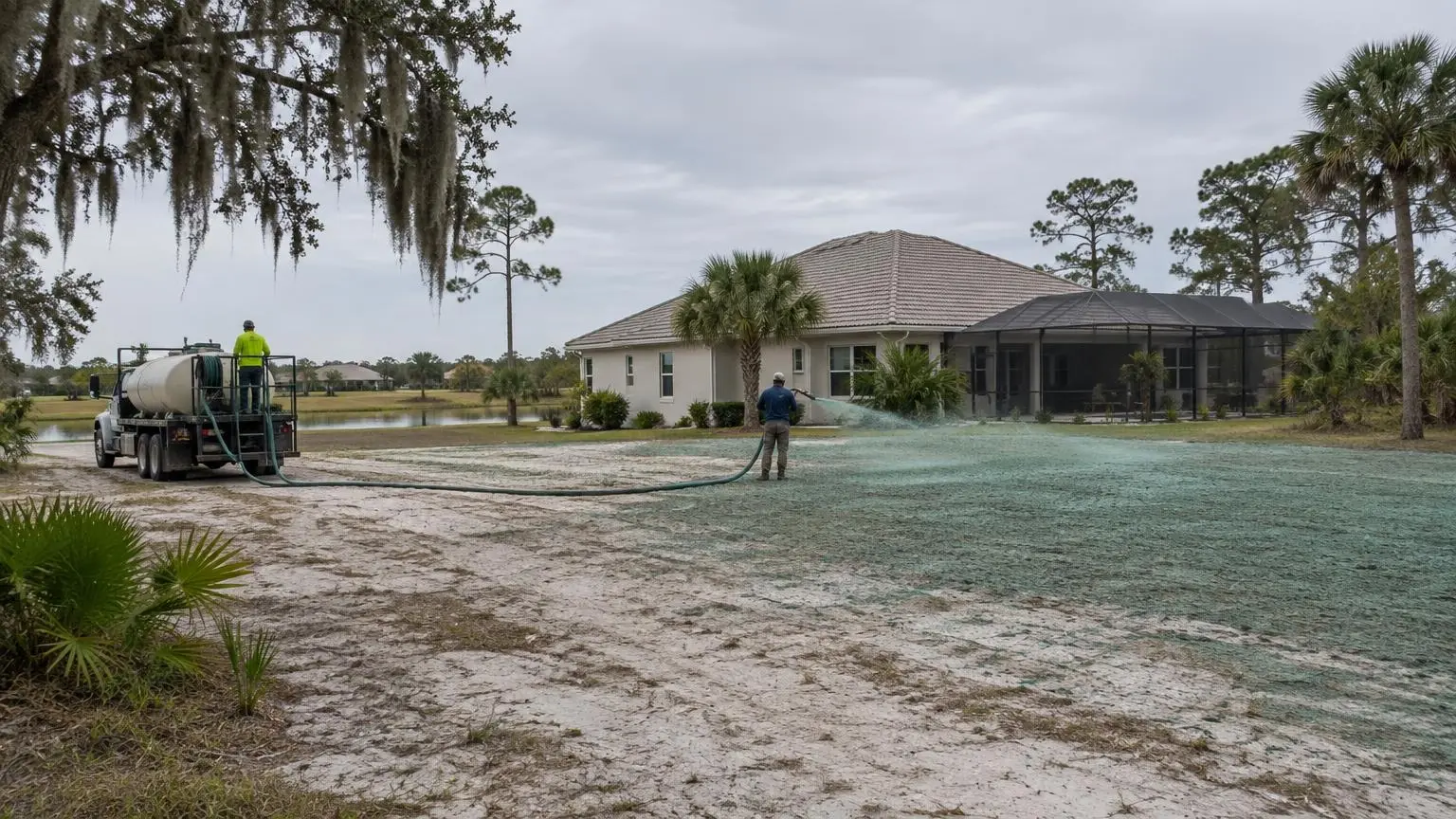
Home lawn hydroseeding is the most common job we do in Sarasota. A new house leaves a yard of packed fill and builder sand. An older yard may be so far gone with weeds, bare patches and old turf that repairing it makes no sense. In both cases the answer is new lawn installation from seed: we prepare the ground, then pump a mix of seed, wood fiber mulch, tackifier and water over it in one pass. The mulch shades the seed and holds moisture on the surface, which on Gulf Coast sand is the difference between a hydroseed lawn that comes up evenly and one that comes up in streaks.
Is your yard a candidate?
Hydroseeding fits best when the area is mostly bare or will be stripped, when you are happy with bahiagrass, and when you can wait a few weeks for full cover. It is the wrong choice in two cases. If you want St. Augustinegrass, the coarse, dense grass on many Sarasota lawns, it cannot be grown from seed and has to be sodded or plugged. And if you need a finished lawn by a set date, such as a home sale closing, sod is faster.
Why bahiagrass
UF/IFAS describes bahiagrass as a low-maintenance grass that persists better than other grasses in infertile, sandy soils and does not need much water or fertilizer. It forms a deep, extensive root system and is a good choice for larger lots and yards without irrigation. Argentine bahiagrass makes a denser, darker green lawn with fewer seed heads than Pensacola, which is why it is usually the better lawn variety. Pensacola holds up well and has more seed heads, so it suits roadsides, ditches and acreage. The trade-off for any bahia is a more open lawn than St. Augustine and tall seed heads in summer that need regular mowing.
Ground preparation is most of the job
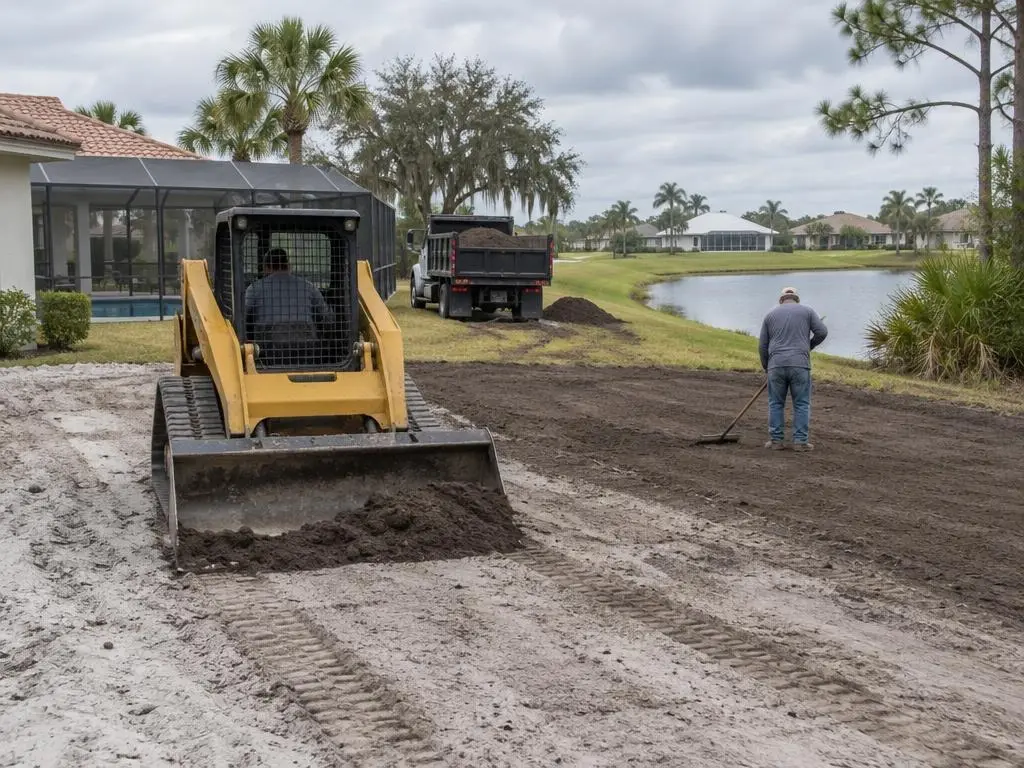
UF/IFAS lists the steps for preparing a Florida lawn, and we follow them. Construction debris, roots, rocks and stumps come out. The rough grade is set so the yard falls 1 to 2 percent away from the house, which is a half foot to a foot of fall over 50 feet. We test compaction with a rod: if it cannot be pushed 6 inches into moist soil by hand, the ground needs loosening. On sand with almost no silt or clay, tilling alone does not last, so we mix in compost, typically 3 to 6 cubic yards per 1,000 square feet, worked into the top 6 inches. Then the surface is raked smooth, rocks larger than a golf ball are removed, and sidewalks and driveways end up level with or slightly above the finished grade.
No fertilizer in the first weeks
Many hydroseeding services nationwide load fertilizer into the tank. We do not, for two reasons. UF/IFAS advises against fertilizing before planting or for the first 30 to 60 days after, because seedlings without roots cannot use it and it leaches through sand. And from June 1 to September 30, Sarasota County bans fertilizer containing nitrogen or phosphorus. Your care sheet gives the date for the first feeding and the products allowed at that time of year.
Watering a new seeding on sand
The surface has to stay damp until the seed is up and rooted. In the wet season, afternoon storms often do much of that, and we set the irrigation to fill gaps rather than run on a fixed schedule. From late fall through spring, when Sarasota can go a week without rain, the irrigation does all of it: several short cycles a day at first, then fewer and longer ones as roots go down. UF/IFAS recommends running irrigation as needed rather than on automatic once a lawn is established, and we explain how to make that switch.
What it costs
Hydroseeding cost depends on area, access for the truck and hose, and how much prep the ground needs. HomeGuide's range is $0.12 to $0.35 for each square foot sprayed, and it says many companies will not roll out for less than $300 to $500 or more. Grading, compost and topsoil are priced separately, and we list each one on the quote so you can see the seed and the soil work apart. Get a free estimate
What a New Lawn Job Includes
Every residential seeding includes some or all of these steps, depending on what the yard starts as.
Site walk and soil check
Compaction test, drainage check, irrigation coverage and a soil sample if pH or nutrients are in question.
Clearing and rough grade
Debris, roots and old turf removed, and the yard shaped to fall away from the house.
Compost or topsoil
Organic matter tilled into the top 6 inches of sand so it holds water and nutrients.
Fine grade
A smooth, firm seedbed with no low spots where water sits.
Bahiagrass hydroseed
Argentine or Pensacola bahia sprayed with wood fiber mulch and tackifier.
Care sheet
Written watering steps for the season, first mowing height and the first allowed fertilizer date.
Typical Lawn Hydroseeding Costs
| Work | Published range |
|---|---|
| Per square foot, sprayed (HomeGuide) | $0.12 to $0.35 |
| A 5,000 sq ft yard (HomeGuide) | $1,000 to $1,750 |
| A 10,000 sq ft yard (Angi) | $700 to $2,200 |
| Minimum job charge (LawnStarter) | $300 to $500 |
| Sod instead, installed (HomeGuide) | $1 to $4 per sq ft |
Figures come from national consumer cost guides, not from a Sarasota job. Compost, grading and access change the total. The quote you sign carries the amount you will be billed.
From Bare Yard to First Mow
1. Look at the yard
We measure, test compaction, check drainage and irrigation, and talk through bahia versus sod.
2. Quote in writing
Seed, prep and soil each get their own line.
3. Prepare the ground
Clear, grade, amend and fine-grade the seedbed.
4. Spray
Seed, wood fiber mulch and tackifier go on in an even, green coat.
5. Watering and first mow
You follow the care sheet; we answer questions until the first mowing.
Why Choose Us for Home Lawn Hydroseeding
Honest about grass type
If seed will not give you the lawn you want, we say so on the first visit.
Prep comes first
We fix compaction and grade before we spray, because seed cannot fix bad ground.
Mix matched to the season
Our slurry follows Sarasota County's summer fertilizer rules.
Home Lawn Hydroseeding Questions
What should I budget to hydroseed an average Sarasota yard?
Per square foot, HomeGuide puts hydroseeding at $0.12 to $0.35. On a 5,000 square foot yard that works out to roughly $1,000 to $1,750, and it notes small-job minimums around $300 to $500. Grading, compost and topsoil are added on top when the ground needs them. We give you a written number after measuring.
How soon will I see grass?
Under good conditions, hydroseeded grass often shows in about 5 to 7 days, though Angi gives 7 to 14 days as the usual window for sprouting. Bahiagrass is on the slow end of that because its seed germinates slowly, especially in cool or dry weather. Warm, wet months bring it up fastest.
Can you hydroseed St. Augustinegrass?
No. St. Augustinegrass is grown only from sod, plugs or sprigs, because it does not produce usable seed. If that is the lawn you want, we will tell you and talk about sod or plugs instead.
When can I mow a hydroseeded lawn?
Usually 4 to 6 weeks after seeding, when the blades reach roughly 4 inches. UF/IFAS recommends keeping bahiagrass at 3 to 4 inches with a sharp rotary blade, because its tough leaves and seed stalks tear with a dull one.
Do I need irrigation to hydroseed a lawn here?
Not always in the wet season, when rain often keeps the surface damp. From October through May, yes, or a plan to water by hose, because the sand dries out quickly. Bahia's deep roots make it the best choice for yards that will not have irrigation once established.
Home Lawn Hydroseeding Service Areas
- Hydroseeding in Sarasota, FL
- Hydroseeding in Bradenton, FL
- Hydroseeding in Lakewood Ranch, FL
- Hydroseeding in Venice, FL
- Hydroseeding in North Port, FL
- Hydroseeding in Palmetto, FL
- Hydroseeding in Port Charlotte, FL
- Hydroseeding in Punta Gorda, FL
- Hydroseeding in Englewood, FL
- Hydroseeding in Osprey, FL
- Hydroseeding in Nokomis, FL
- Hydroseeding in Parrish, FL
- Hydroseeding in Ellenton, FL
- Hydroseeding in Myakka City, FL
- Hydroseeding in Fruitville, FL
- Hydroseeding in Longboat Key, FL
- Hydroseeding in Siesta Key, FL
- Hydroseeding in Holmes Beach, FL
- Hydroseeding in Rotonda West, FL
- Hydroseeding in Babcock Ranch, FL
- Hydroseeding in Bayshore Gardens, FL
- Hydroseeding in Whitfield, FL
- Hydroseeding in Terra Ceia, FL
- Hydroseeding in Harbour Heights, FL
Get a Home Lawn Hydroseeding Estimate
We will measure the yard and tell you whether seed or sod fits.