
Builders and site work
Commercial & Development Hydroseeding in Sarasota, FL
Acreage seeding and final stabilization for subdivisions, commercial pads and stormwater areas across Sarasota, Manatee and Charlotte counties.
- We measure the ground before we put a number on paper
- Seed mix and fertilizer timed to Sarasota County's summer rules
- Sediment barriers set before clearing near ponds, canals and swales
Grass for Sites Measured in Acres
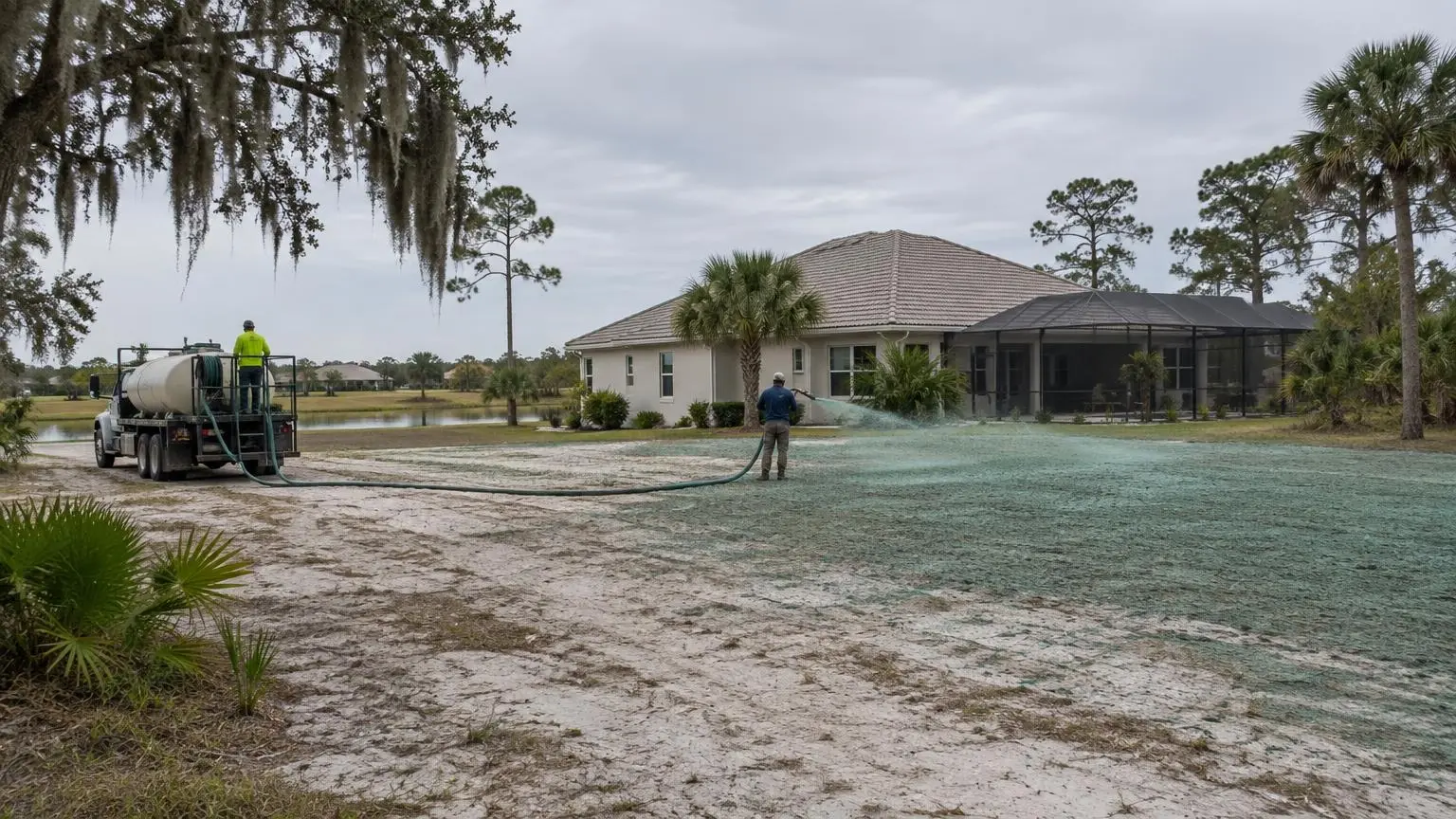
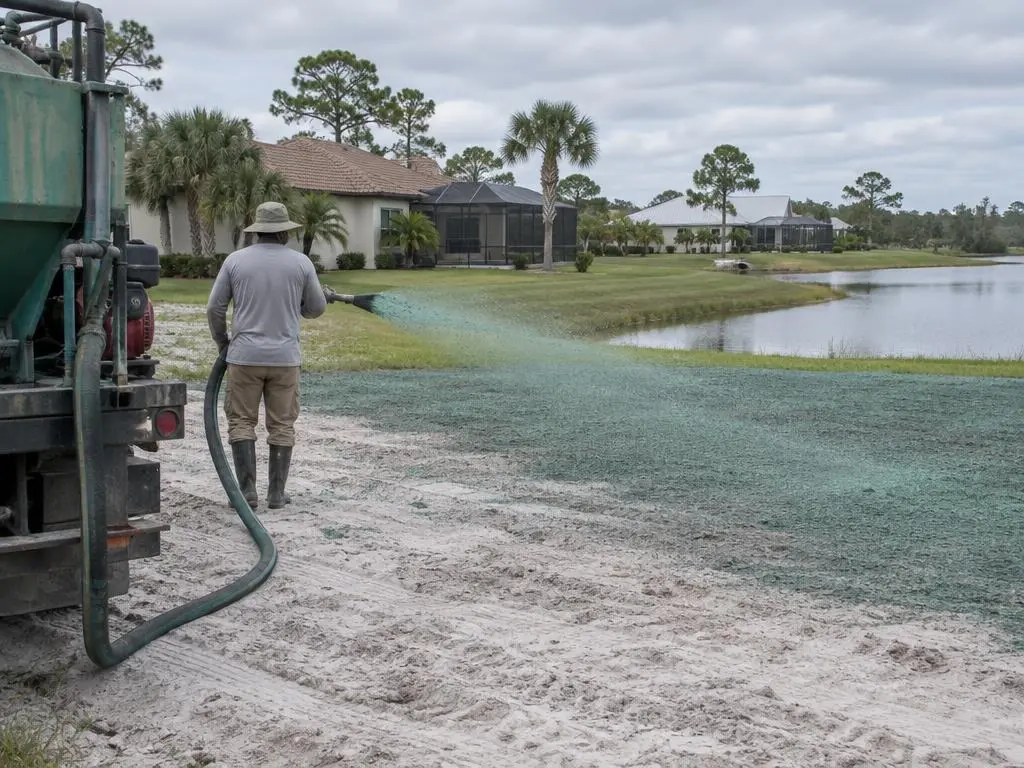
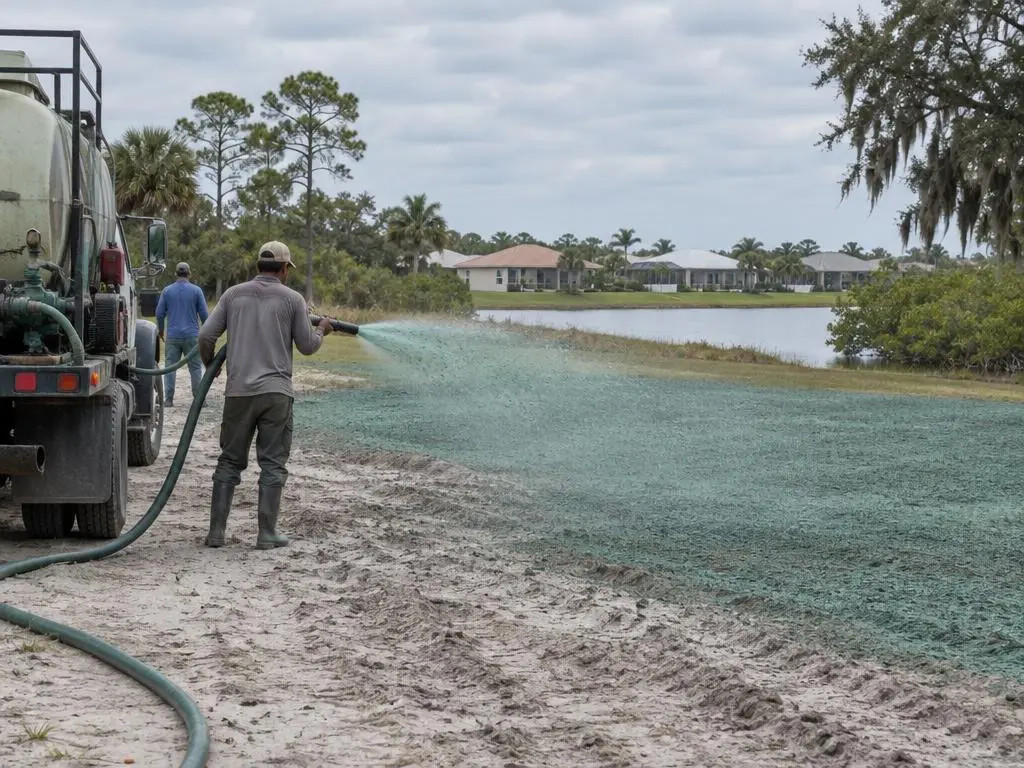
Commercial and development hydroseeding covers the work builders, site contractors and property managers call us for around Sarasota: seeding finished lots before closing, stabilizing open ground during construction, covering retention pond banks and swales, and grassing commercial outparcels and road shoulders. Among hydroseeding contractors, this is where the truck earns its keep. A hydroseeder can cover far more ground in a day than a crew laying sod, and the mulch and tackifier keep seed in place on slopes and around inlets where loose dry seed would wash out.
Where development is happening
East of I-75, the Lakewood Ranch, Parrish and North Port areas are filling in with new subdivisions, and Babcock Ranch is being built out of a former timber and cattle ranch. Those jobs involve many lots on one schedule, long runs of swale, retention ponds with graded banks, and inspections that do not wait for the weather. We work to the builder's sequence: seeding lots as they finish grading, coming back for punch-list areas, and stabilizing pond banks as soon as the slope is shaped.
Rules that drive the schedule
Under Florida DEP's Construction Generic Permit, a job needs state coverage once it disturbs an acre of ground. Smaller sites are pulled in too when they are "part of a larger common plan of development" in DEP's wording. Coverage means a stormwater pollution prevention plan and a notice of intent filed at least two days before work begins. Sarasota County's development code adds its own requirements: site development plans need an erosion and sediment control plan covering perimeter controls, stabilized construction entrances, inlet protection, outlet stabilization and protection of receiving waters. The county also calls for all final grading to be complete, including stabilization of earthen berms in perimeter buffers, before sign-off. Grass is how much of that ground gets stabilized, and hydroseed is usually the quickest way to establish it.
Matching seed to the site
Commercial ground in this region is mostly bahiagrass country. UF/IFAS notes that Pensacola bahia, with its extensive root system and good tolerance of heat and cold, is the most widely grown bahiagrass and is suited to roadside plantings. Argentine bahia is denser and darker and suits lawn areas on commercial frontages where looks matter more. On pond banks, ditches and back-of-lot areas that will not be irrigated, bahia's drought tolerance is the main reason to choose it: it browns and goes dormant in a long dry spell, then recovers instead of dying.
The rainy season changes the mix
From June 1 through September 30, Sarasota County bans fertilizer containing nitrogen or phosphorus, which affects every seeding spec that calls for fertilizer in the tank. During those months we spray seed, mulch and tackifier only, and note it on our paperwork so the site's records match what went down. The same months bring about 60 percent of the year's rain at the airport, so we raise mulch rates on slopes and use bonded fiber matrix or blankets in channels and steep areas.
Working with the rest of the site team
We coordinate with the grading contractor on when ground is ready, with the irrigation installer on zones, and with whoever is responsible for the SWPPP on inspection timing. We can also install the silt fence and inlet protection ourselves, which keeps one company responsible for the perimeter from clearing to final stabilization. Where seed alone will not hold a slope steeper than about 10 percent, we recommend sod or blankets instead, because UF/IFAS advises against seeding mounds that steep.
Pricing large areas
Large-area hydroseeding is usually priced per acre or per square foot, with mobilization for separate visits. Published per-acre ranges are in the table below. For phased projects we give unit prices that hold through the phases, and we price any return trips for washouts after major storms up front. Get a free estimate
Commercial Work We Take On
Typical commercial and construction seeding jobs around Sarasota.
Subdivision lot seeding
Finished lots seeded in the builder's sequence, with return visits for touch-up.
Retention pond banks
Bank seeding with heavier mulch rates or blankets on the steeper faces.
Swales and ditches
Seed plus bonded fiber matrix or blankets where water runs.
Commercial frontage and outparcels
Lawn-quality bahia along entrances and parking lot edges.
Right-of-way and shoulders
Pensacola bahia on road shoulders and utility corridors.
Temporary stabilization
Fast cover on stockpiles and graded areas that will sit idle for a while.
Published Large-Area Seeding Costs
| Work | Published range |
|---|---|
| Hydroseeding per acre (LawnStarter) | $2,136 to $4,897 |
| Hydroseeding per acre (Fixr) | $2,000 to $4,000 |
| One acre (HomeAdvisor) | $2,600 to $8,700 |
| Public park re-seeding bids, 2023 (City of North Little Rock, AR) | $2,595 and $3,325 per acre |
These are published ranges and one public bid result, not our prices. Access, phasing, mulch rate and blankets change the number. Your contract price is the one on the proposal we both sign.
How a Commercial Job Runs
1. Plans and walk
We review the grading plan, SWPPP and seeding spec, then walk the site.
2. Unit-price proposal
Per acre or per square foot, with mobilization and blanket areas listed separately.
3. Schedule to the sequence
We seed areas as they come off grading instead of waiting for the whole site.
4. Spray and document
Mix, rates and dates recorded for each area.
5. Storm checks
We look at slopes and channels after heavy rain and repair what moved.
Why Choose Us for Commercial & Development Hydroseeding
Perimeter to final cover
One company can handle the silt fence, inlet protection and the grass that replaces them.
Paperwork that matches the ground
Mix and rates are recorded by area, including the summer no-fertilizer mix.
Seeded as areas finish
We follow the grading crew instead of making them wait on us.
Commercial & Development Hydroseeding Questions
How do hydroseeding contractors price a subdivision?
Usually by the acre or square foot, plus a charge for each mobilization. Published cost guides place large-area hydroseeding somewhere between about $2,000 and $4,900 an acre. Blanket areas, bonded fiber matrix and storm repairs are listed as separate line items.
Can you include fertilizer if the spec calls for it during summer?
Not if the fertilizer contains nitrogen or phosphorus. Sarasota County bans those from June 1 through September 30. We spray seed, mulch and tackifier, record the change, and can come back after the ban to fertilize if the spec requires it.
Does a site under one acre still need erosion controls?
Often yes. State permit coverage kicks in at an acre of disturbance, and a smaller lot can still need it when it belongs to a bigger subdivision or phased build. Separately, Sarasota County requires erosion and sediment control measures for all new construction to protect neighboring parcels.
What grass do you use on pond banks and road shoulders?
Usually Pensacola bahiagrass, which UF/IFAS describes as having an extensive root system and good stress tolerance, and which suits roadside plantings. On visible commercial frontage we often use Argentine for a denser, darker look.
Commercial & Development Hydroseeding Service Areas
- Hydroseeding in Sarasota, FL
- Hydroseeding in Bradenton, FL
- Hydroseeding in Lakewood Ranch, FL
- Hydroseeding in Venice, FL
- Hydroseeding in North Port, FL
- Hydroseeding in Palmetto, FL
- Hydroseeding in Port Charlotte, FL
- Hydroseeding in Punta Gorda, FL
- Hydroseeding in Englewood, FL
- Hydroseeding in Osprey, FL
- Hydroseeding in Nokomis, FL
- Hydroseeding in Parrish, FL
- Hydroseeding in Ellenton, FL
- Hydroseeding in Myakka City, FL
- Hydroseeding in Fruitville, FL
- Hydroseeding in Longboat Key, FL
- Hydroseeding in Siesta Key, FL
- Hydroseeding in Holmes Beach, FL
- Hydroseeding in Rotonda West, FL
- Hydroseeding in Babcock Ranch, FL
- Hydroseeding in Bayshore Gardens, FL
- Hydroseeding in Whitfield, FL
- Hydroseeding in Terra Ceia, FL
- Hydroseeding in Harbour Heights, FL
Get a Commercial & Development Hydroseeding Estimate
Send us the plans and we will price the site by unit.